

ANGKASA-X PROJECT
THE ROAD TO BETTER NETWORK CONNECTIVITY

The Stifling Of Growth Due to Poor Internet Connectivity
Malaysian student sits exams in a tree to ensure good wifi
A university student in Malaysia who went out on a limb to ensure she had a good internet connection to sit her exams online has impressed many with her resourcefulness.
Eighteen-year-old Veveonah Mosibin lives in Sabanalang Pitas vallage, in a remote part of the eastern state of Sabah, where broadband services are limited.

Science student Veveonah Mosibin completed two tests in a treetop then slept there when it got dark.
-
Malaysia Amidst the Pandemic
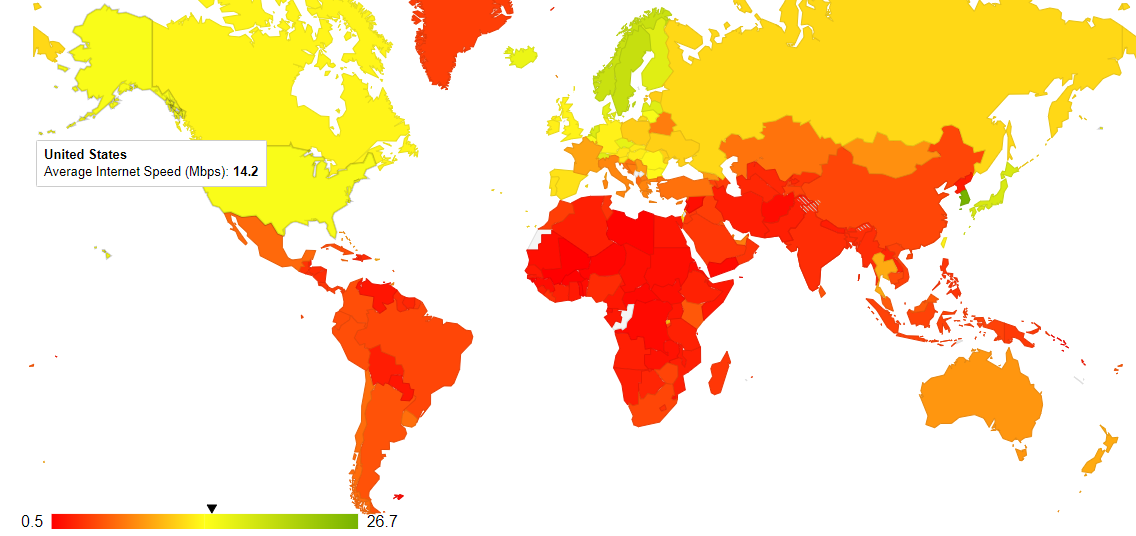
Apart from leading countries South Korea & Japan, most South Asian countries including Malaysia are lagging behind.
...Malaysia saw a sharp decrease in the average download speed (both mobile and fixed broadband) from the March 16 till the March 22.
The significance of that particular time interval (March 16-22) is that the MCO was imposed in Malaysia from the March 18.
This could mean that the decrease in average speeds in Malaysia could be down to an increased strain being placed upon network operators in the country.
Conversely, the average download speed over fixed broadband in China and Japan has improved, with both countries also hit by effects of the pandemic.(Extracted from media news MalayMail, March 2020) -
East Malaysia Hardest Hit
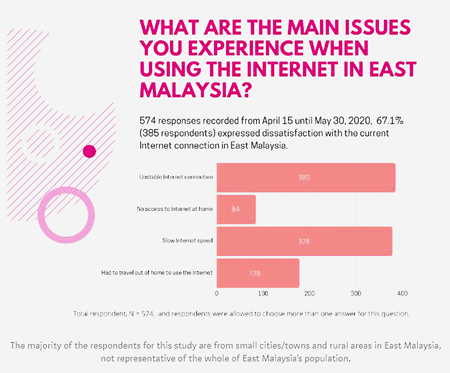
A STUDY has found dissatisfaction among 67.1 per cent or 385 users over Internet access in East Malaysia due to weak, slow, and unstable connectivity - with some being unable to log in at all.
Assistant Professor of Communication at Northen State University in Aberdeen, South Dakota, Dr Nuurrianti Jalli said the study was recorded from April 15 to May 30 this year.Sabah Education Director Dr Mistirine Radin admitted that lack of internet access and gadgets such as smartphones among students from the state's rural and interior areas, pose a challenge to the PdPc sessions.
"Online learning is not new in education because it has been practiced in school. Normally, sessions in school are held at computer labs equipped with high-speed internet."
"However, conducting online PdPc sessions during the MCO is a challange because the students who are at home are separated from the facility. Some students do not have access to the Internet, not to mention not having gadgets."(Extracted from media news The Borneo Post, 9th May 2020 & 19th July 2020)
Scenario
- Low Cost for Deployment of 5G in South East Asia
- Increase in Technology and Economic Growth
- Better Manageability of Network Infrastructure
- Faster Deployment of Network Availability
- Reduce Unnecessary Costs Expenditure
- Creates an epicenter for a Joint Economic Development
- Emerge as a "Unicorn" in the rise of Telecommunication Industry
- Expansion of network across the country as well as neighbouring countries
- Improves Quality of Experience (QoE) in high capacity applications
- Provides as backup network in the event of an interference in any man-made 5G infrastructure
- Provides batter coverage and broadcast capabilities to support Internet of Things (IoT)
- The next generation connectivity via satelite will help to develop & boost a totally new generation of start-ups ecosystem in Borneo & surrounding region
- With the new generation of connectivity via low orbit satelite, downstream business such as E-commerce transactions, Business Application Development, Network Security, Cloud infrastructure and Data Centre will take off via application related to space tech and next generation R&D
- Regional economy growth leading to further investment in this region and fostering good working relations with neighbouring countries in jointly managed promotional activities
SOLUTION: Why Low Earth Orbit Satellite (LEO)?
Low Earth Orbit (LEO) satellites are miniaturized, orbiting versions that operate between 500 and 2000 kilometers above Earth's surface and weigh under 500kg.
Due to its low orbit, latency is significantly reduced as the satellite is better positioned to quickly receive and transmit data. LEO satellites continuously hand off communication signals and traffic across a constellation of satellites.
This ensures seamless, wide-scale coverage over a pre-defined geographical area. Not only is the inter-satellite solution providing better latency performance, it also guarantees a much better level of security by avoiding ground stations.
Better Spectrum
Better Tracking & Network Access
Better Management
Likewise, the throughput increase by Intersatellite Link (ISL) also reduces backhaul costs, improve satellite control and network latency.
Combining these elements would promote the autonomous and semiautonomous control and management of spacecraft, thereby reducing staffing requirements.
Benefits
- Low Cost for Deployment of 5G in South East Asia
- Increase in Technology and Economic Growth
- Better Manageability of Network Infrastructure
- Faster Deployment of Network Availability
- Reduce Unnecessary Costs Expenditure
- Creates an epicenter for a Joint Economic Development
- Emerge as a "Unicorn" in the rise of Telecommunication Industry
- Expansion of network across the country as well as neighbouring countries
- Improves Quality of Experience (QoE) in high capacity applications
- Provides as backup network in the event of an interference in any man-made 5G infrastructure
- Provides better coverage and broadcast capabilities to support Internet of Things (IoT)
- The next generation connectivity via satelite will help to develop & boost a totally new generation of start-ups ecosystem in Borneo & surrounding region
- With the new generation of connectivity via low orbit satelite, downstream business such as E-commerce transactions, Business Application Development, Network Security, Cloud infrastructure and Data Centre will take off via application related to space tech and next generation R&D
- Regional economy growth leading to further investment in this region and fostering good working relations with neighbouring countries in jointly managed promotional activities